

Branded vs Standard Security Uniforms: Why Your Brand Identity Starts at the Gate
- May 14, 2026
- Posted by: admin
- Categories: Security Uniform, Uncategorized
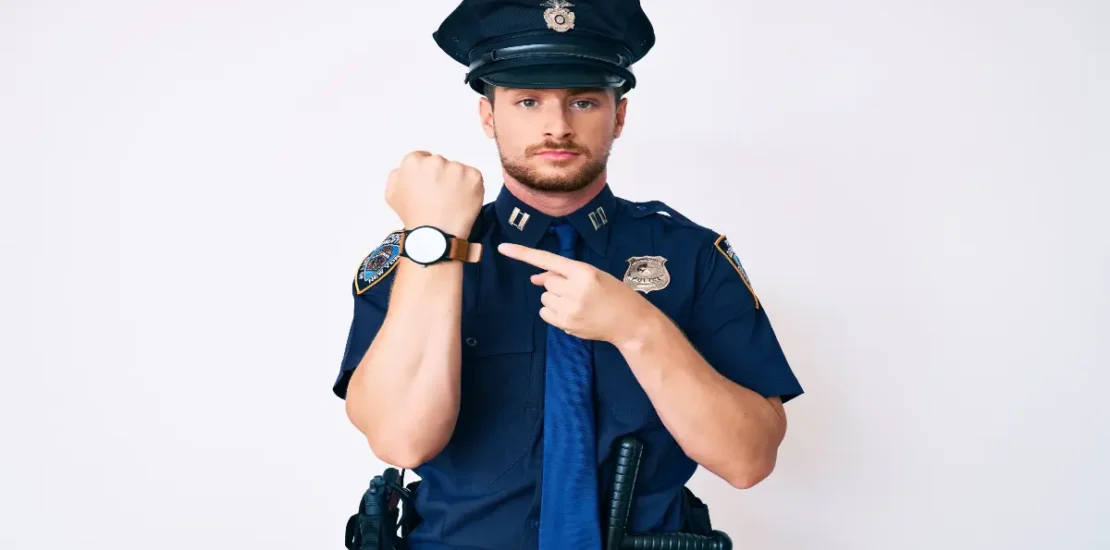
The gate is your first line of defence. But it is also your first brand impression.
The security guard at your entrance is the first person a visitor, client, or delivery driver sees. Before a word is spoken, your guard’s uniform communicates something about your organisation.
Standard security uniforms say: we have security. Branded security uniforms say: we are a professional, organised, and credible operation.
This distinction matters more than many buyers realise. In this blog, we break down exactly what separates branded from standard security uniforms — and help you decide which is right for your organisation.
What Are Branded Security Uniforms?
Branded security uniforms are uniforms manufactured to an organisation’s specific brand standards. They go beyond basic function. They carry your logo, your colours, and your identity.
They are produced by security uniform manufacturers who offer customisation services. This includes embroidery, screen printing, custom dyeing, and tailored design work.
Standard security uniforms suppliers, by contrast, come from a fixed catalogue. They come in set colours — usually navy, olive, or grey. They have no branding. Any logo or patch is added after purchase, often with inconsistent results.
The key difference is not cosmetic. It is strategic.
5 Reasons Brand Identity Starts at the Gate
1. First Impressions Happen in Seconds
Research in consumer psychology shows that people form first impressions in under seven seconds. The guard at your gate is often the first human contact a visitor has with your organisation.
A guard in a well-fitted, branded uniform immediately signals professionalism. It tells the visitor they are in good hands. A guard in a generic, ill-fitting uniform does the opposite — regardless of how skilled that guard is.
2. Uniforms Communicate Authority
Authority is not just about physical presence. It is also visual. Studies in social psychology show that uniforms increase perceived authority and compliance from the public.
A branded uniform amplifies this effect. It combines the authority signal of a security uniform with the credibility signal of a recognised brand. Guards become brand ambassadors — not just security personnel.
3. Branded Uniforms Improve Accountability
Standard uniforms create anonymity. Any person in a similar uniform looks like ‘a guard’. This creates risk.
Branded security uniforms with personalised ID panels, name tags, and numbered badges make every guard identifiable. This reduces impersonation risk. It also encourages better behaviour — guards know they are individually identifiable at all times.
4. Your Security Team Reflects Your Brand Standards
Every part of your operation communicates your standards. Your reception desk, your signage, your website — and your security team.
For organisations in hospitality, healthcare, corporate services, and retail, brand consistency is not optional. A 5-star hotel does not use generic workwear in any department. Neither should it at the gate.
When you work with a security guard uniform manufacturer who understands branding, you get uniforms that integrate seamlessly with your overall visual identity.
5. Branded Uniforms Deliver Long-Term Cost Efficiency
This surprises many buyers. Branded uniforms cost slightly more upfront. But they are typically made from higher-quality fabric. They last longer. They need fewer replacements.
The cost analysis in the table below shows how this plays out over a two-year period.
Branded vs Standard Security Uniforms: Feature Comparison
This table provides a direct comparison across 10 key decision factors. Use it to evaluate which option fits your organisation’s requirements.
| Feature | Branded Security Uniforms | Standard Security Uniforms |
| Logo & Identity | Company logo embroidered or printed; custom badge placement | No branding; generic look |
| Colour Scheme | Custom colours matched to brand guidelines (Pantone/hex) | Fixed catalogue colours only |
| Authority Signal | Reinforces brand + security role simultaneously | Signals security role only |
| Design Flexibility | Full customisation — lapels, epaulettes, tabs, piping | Off-the-shelf designs only |
| Guest/Visitor Impact | Staff are instantly recognisable as part of your organisation | Guards look interchangeable |
| Accountability | Name tags and ID panels per guard reduce anonymity | Uniform anonymity increases risk |
| Reorder Consistency | Supplier holds your brand specs for exact batch matching | Colours may vary between reorders |
| Cost | 5–15% higher upfront; lower total cost over 2+ years | Lower upfront; variable long-term |
| Lead Time | First order: 3–4 weeks. Reorders: 1–2 weeks (spec on file) | Usually 1–2 weeks from catalogue |
| Best Suited For | Corporates, hospitals, malls, hotels, gated communities | Small teams, short-term contracts |
The Real Cost Comparison: Branded vs Standard Over Two Years
Many buyers look only at the cost per piece. This is the wrong metric. The right metric is cost per wash — how much each use of the uniform actually costs.
A cheaper uniform that lasts 25 washes costs far more per use than a premium uniform that lasts 80 washes. Over a two-year deployment with 300 guards, the difference runs into lakhs of rupees.
| Uniform Type | Cost Per Set (Rs.) | Wash Lifespan | Cost Per Wash (Rs.) | 2-Year Total Cost* |
| Standard — Budget | 350–450 | 25–30 washes | 14–18 | Higher (frequent replace) |
| Standard — Mid-range | 500–700 | 40–50 washes | 12–15 | Moderate |
| Branded — Entry | 750–900 | 55–65 washes | 12–14 | Comparable to mid-range std |
| Branded — Premium | 950–1,400 | 75–90 washes | 11–16 | Lowest over 2 years |
| Branded — FR/Specialist | 1,800+ | 60–80 washes | 23–30 | Required for compliance |
Key Insight
Premium branded uniforms often have the lowest cost per wash. Over a two-year period, they match or beat mid-range standard uniforms on total spend — while delivering significantly better brand value.
Who Should Invest in Branded Security Uniforms?
Not every organisation needs fully branded security uniforms. The right choice depends on your context, budget, and brand priorities.
Branded Uniforms Are the Right Choice If You Are:
- A hotel, resort, or serviced apartment where guest experience drives revenue.
- A hospital or private healthcare facility where trust and professionalism are non-negotiable.
- A corporate campus, IT park, or business hub with multiple client organisations on site.
- A shopping mall, retail chain, or entertainment venue with high daily footfall.
- A gated residential complex that wants consistent brand identity across all touchpoints.
- A bank, financial institution, or government facility where brand and authority must align.
Standard Uniforms May Suit You If You Are:
- A small business with fewer than 10 guards and no public-facing brand requirement.
- Running a short-term security deployment of under six months.
- Working within a very tight budget with no flexibility for customisation.
- Deploying guards in a low-visibility, back-of-house role only.
How to Brief a Security Guard Dress Manufacturer on Branding
Getting branded uniforms right requires a clear brief. Security guard dress manufacturers who specialise in branded work will guide you — but you need to come prepared.
Here is what to provide:
- Logo files: High-resolution vector format (EPS, AI, or SVG). Avoid JPEG or PNG — they distort at embroidery scale.
- Colour codes: Pantone reference numbers or hex codes for all brand colours. This ensures accurate matching across dye lots.
- Placement guide: Specify exactly where the logo, name tag, and any badges should sit. Left chest, right shoulder, or cap front — be precise.
- Size breakdown: Provide a size distribution for your guard team before ordering. This prevents size shortages at delivery.
- Fabric preference: Specify your fabric requirements. State whether you want polyester-viscose blend, poly-cotton, or a premium weave.
- Reference sample: If you have an existing uniform you liked, share it. Security uniform manufacturers use it to match quality benchmarks.
A reputable uniform manufacturer in India or security guard uniform supplier will confirm all specifications in writing before production begins. This typically includes fabric type, colour, sizing, branding details, stitching requirements, and delivery timelines. Reliable suppliers also provide a pre-production sample for approval, helping buyers verify quality, fit, and overall uniform appearance before placing a bulk order.
Red Flags When Choosing a Security Uniform Supplier for Branded Work
Branded uniforms require more precision than standard orders. These are the warning signs that a supplier may not deliver what you need.
| Red Flag | Why It Matters |
| They cannot match your Pantone colour | Colour inaccuracy will undermine brand consistency across all locations. |
| They refuse to provide a pre-production sample | You have no way to verify quality before committing to the full order. |
| They cannot hold your brand specs on file | Every reorder becomes a new brief. Colours and logos drift over time. |
| They have no embroidery capability in-house | Outsourced embroidery means less quality control and longer lead times. |
| They use JPEG logos for embroidery | JPEG files pixelate at embroidery scale. Vectors are non-negotiable. |
| Lead time exceeds 6 weeks for a first order | Most experienced branded uniform manufacturers deliver in 3–4 weeks. |
Conclusion
The choice between branded and standard security uniforms is not just about appearance. It is about what your organisation stands for.
Standard uniforms meet the minimum requirement. They put a guard at the gate. Branded uniforms do more. They put your organisation at the gate.
For any operation where brand trust matters — hotels, hospitals, corporate campuses, retail, residential complexes — branded security uniforms are the right investment. They cost a little more upfront. They deliver far more in return.
Start by finding a security guard uniform manufacturer who understands your brand requirements. Provide a clear brief. Order samples. And plan for a two-year uniform programme, not just a one-time purchase.
Frequently Asked Questions
Q1. What is the difference between branded and standard security uniforms?
Standard security uniforms are off-the-shelf items in fixed colours with no organisation-specific branding. Branded security uniforms are custom-manufactured to include your company logo, colour palette, and identity elements. They are produced by security uniform manufacturers who offer full customisation services.
Q2. How much more do branded security uniforms cost than standard ones?
Branded uniforms typically cost 5 to 15 percent more per set upfront. However, they are made from higher-quality fabric and last significantly longer. Over a two-year period, the cost per wash is often equal to or lower than mid-range standard uniforms.
Q3. Can I add my company logo to standard security uniforms?
Yes, but with limitations. Standard uniforms can have logos added via embroidery or patch attachment after purchase. However, this is less accurate than manufacturing with branding built in. Colours may not match your brand exactly, and quality control is harder to manage at scale.
Q4. How long does it take to produce branded security uniforms?
Most experienced security guard uniform manufacturers deliver branded orders in three to four weeks for a first production run. Reorders, where the supplier holds your brand specifications on file, typically take one to two weeks.
Q5. What information do I need to give a security guard dress manufacturer for branded work?
You need to provide: a vector logo file (EPS, AI, or SVG), Pantone or hex colour codes for all brand colours, logo and badge placement instructions, your size distribution, and fabric preferences. A good supplier will confirm all of this in a written specification before production.
Q6. Which security uniform supplier is best for branded uniforms?
Look for a security uniform supplier with in-house embroidery capability, experience working with corporate or institutional clients, and a process for holding brand specifications on file for consistent reorders. Always request references from previous branded uniform projects.