

Complete Guide to Hospital Uniforms: Types, Fabrics, Features & Selection
- August 13, 2026
- Posted by: admin
- Category: Uncategorized
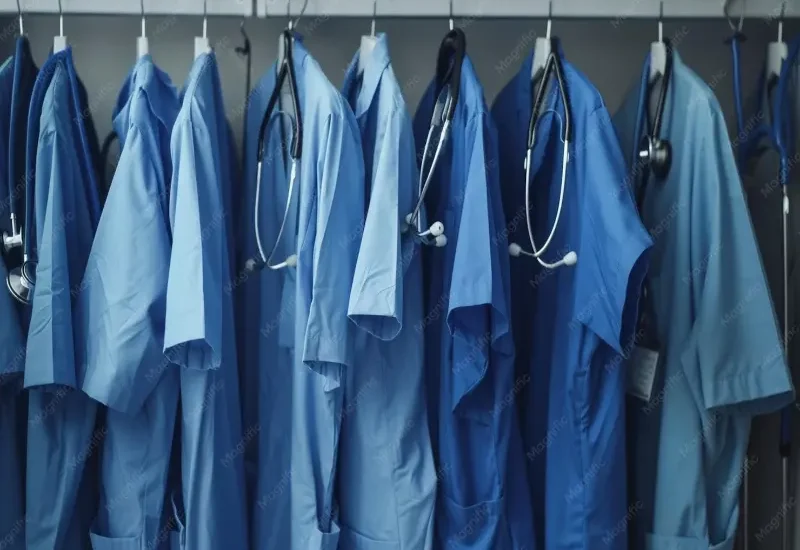
Hospital uniforms are an important part of healthcare environments. They help staff maintain a professional appearance while providing the comfort, mobility, and practicality needed during long working hours. From doctors and nurses to technicians, housekeeping teams, and other support staff, different roles may require different types of uniforms.
Choosing the right hospital uniform involves more than selecting a colour or design. Fabric, fit, durability, ease of maintenance, functionality, and the requirements of each department should all be considered before placing an order.
This guide explains the different types of hospital uniforms, commonly used fabrics, important features, and what hospitals should consider when selecting a uniform manufacturer or supplier.
Why Are Hospital Uniforms Important?
Healthcare professionals often spend several hours moving between patient rooms, treatment areas, laboratories, operating theatres, and other departments. Their uniforms therefore need to support both professional presentation and everyday functionality.
A well-designed hospital uniform can provide:
- Comfortable movement during long shifts
- A professional and consistent appearance
- Practical storage through functional pockets
- Easy washing and maintenance
- Appropriate colour coding for different departments
- Durable performance with frequent use
- A consistent identity for hospital staff
Uniform requirements can also vary according to the role of the employee. A doctor’s coat, a nurse’s uniform, an operating theatre uniform, and a housekeeping uniform may all have different functional requirements.
Types of Hospital Uniforms
Hospitals typically require several types of uniforms depending on staff responsibilities and working environments. Medical uniforms can include doctor uniforms, nurse uniforms, scrubs, OT wear, lab coats, and other apparel designed for healthcare professionals.
Doctor Uniforms
Doctor uniforms are generally designed to create a professional appearance while allowing sufficient movement throughout the working day. Depending on the hospital, doctors may wear formal medical uniforms, coats, scrubs, or a combination of these.
A practical doctor uniform should be comfortable, easy to maintain, and appropriate for the department in which it is used.
Nurse Uniforms
Nurses spend much of their working day assisting patients, moving between departments, and carrying out clinical duties. Their uniforms therefore need to provide comfort and unrestricted movement.
Modern nursing uniforms may include coordinated tops and trousers, scrub sets, tunics, or customised designs based on the hospital’s requirements. These medical staff uniforms should provide comfort, ease of movement, and durability for long working hours.
Hospitals looking for nursing uniform suppliers should consider factors such as fabric quality, sizing availability, stitching, customisation options, and the supplier’s ability to handle bulk orders.
Hospital Scrubs and Medical Scrubs
Scrubs are widely used in hospitals, clinics, diagnostic centres, and other healthcare environments. They typically consist of a comfortable top and trousers and are designed for easy movement.
Hospital scrubs and medical scrubs can be customised according to colour, fabric, pocket configuration, fit, embroidery, and branding requirements.
Scrubs are particularly useful for staff who require practical clothing that can withstand frequent washing and everyday clinical activity.
OT and Surgical Uniforms
Operating theatre staff require uniforms suited to controlled clinical environments. OT uniforms and surgical uniforms are generally designed with practicality, comfort, and hygiene considerations in mind.
The choice of fabric, fit, colour, and design should be aligned with the hospital’s operating theatre requirements and established protocols.
Lab Coats
Doctors, laboratory professionals, pharmacists, researchers, and other healthcare personnel may use lab coats depending on their role.
A lab coat should provide adequate coverage while allowing comfortable movement. Features such as pocket placement, sleeve design, fabric weight, and length can be customised according to the user’s requirements.
Housekeeping and Support Staff Uniforms
Hospital housekeeping and support teams also require uniforms that are comfortable, durable, and easy to maintain.
Uniforms for cleaning and housekeeping personnel can be designed around the practical demands of the job, with suitable fabrics, pockets, colour combinations, and identification details.
For organisations that manage cleaning teams in Mumbai, specialised requirements may also extend to house cleaning uniforms in Mumbai, depending on whether the uniforms are intended for hospitals, commercial facilities, residential services, or other environments.
Choosing the Right Fabric for Hospital Uniforms
Fabric plays a major role in determining the comfort, durability, appearance, and maintenance requirements of a hospital uniform.
The right material should be selected according to the job role, working environment, washing frequency, and desired performance.
Cotton
Cotton is known for its softness and breathability. It can be comfortable for staff who work long shifts, particularly in warm environments.
However, hospitals should also consider shrinkage, wrinkle resistance, drying time, and long-term durability when selecting cotton fabrics.
Polyester-Cotton Blends
Polyester-cotton blends combine characteristics of both fibres. They can offer a balance of comfort, durability, wrinkle resistance, and easier maintenance.
These blends can be practical for uniforms that need to be washed frequently and remain presentable throughout regular use.
Performance Fabrics
Some healthcare environments may benefit from specialised performance fabrics designed around characteristics such as moisture management, durability, stretch, and ease of care.
The appropriate choice depends on the uniform’s intended use rather than simply selecting the most advanced or expensive material.
Features to Look for in Hospital Uniforms
A good hospital uniform should combine professional appearance with practical functionality.
Comfort and Fit
Healthcare workers can spend long hours on their feet, so uniforms should allow comfortable movement without being excessively loose or restrictive.
A proper size range is especially important when ordering uniforms for large teams with different body types.
Durability
Hospital uniforms are frequently washed and used for extended periods. Strong stitching, suitable fabric construction, and quality finishing can help uniforms withstand repeated use.
Functional Pockets
Pockets can make uniforms more practical by providing convenient storage for commonly used items. Their size and positioning should be appropriate for the employee’s role.
Easy Maintenance
Uniforms should be reasonably easy to wash, dry, iron, and maintain. This becomes particularly important for hospitals managing uniforms for large numbers of employees.
Colour and Department Identification
Hospitals may use different colours to distinguish between departments or staff roles. A consistent colour system can make it easier for patients and visitors to identify different teams.
Branding and Customisation
Hospitals can add logos, department names, employee names, or other identification elements through embroidery, printing, or other suitable methods.
Customisation can help create a consistent professional identity across the organisation.
How to Choose Hospital Uniforms for Different Departments
There is no single uniform design that works equally well for every healthcare role.
Before selecting uniforms, hospitals should consider:
- The employee’s job responsibilities
- Working environment
- Required level of mobility
- Expected washing frequency
- Climate and workplace temperature
- Required pockets and functional features
- Department colour requirements
- Available sizes
- Branding requirements
- Budget and expected service life
For example, nurses and clinical staff may prioritise mobility and comfortable scrubs, while administrative healthcare staff may require a more formal appearance.
How to Choose a Hospital Uniform Supplier or Manufacturer
Selecting the right supplier is an important part of developing a reliable uniform programme.
Hospitals should look beyond the quoted price and evaluate the supplier’s ability to provide consistent quality at scale.
Check Fabric and Manufacturing Quality
Ask the supplier about fabric composition, stitching, colour consistency, shrinkage, finishing, and quality-control processes.
Look for Customisation Options
A good hospital uniform supplier should be able to provide options for colours, designs, logos, embroidery, sizing, and other hospital-specific requirements.
Consider Bulk-Order Capability
Hospitals may need uniforms for hundreds of employees at once, followed by additional orders when new employees join. A supplier should therefore be capable of managing both initial bulk requirements and repeat orders.
Evaluate Size and Sampling Support
Before placing a large order, hospitals should ideally review samples and confirm measurements. This can help identify issues with fit, fabric, colour, and construction before full-scale production.
Consider Experience in Healthcare Apparel
A healthcare uniform manufacturer with experience in healthcare apparel may be better positioned to understand the practical requirements of doctors, nurses, technicians, housekeeping teams, and other staff.
Hospital Uniforms vs. Standard Workwear
Hospital uniforms have different requirements from general workwear.
Healthcare staff often work in environments where comfort, mobility, frequent washing, professional appearance, and role identification are important. As a result, hospital uniforms need to be designed around the specific demands of healthcare work.
A standard workwear design may look suitable but may not provide the fit, fabric performance, pocket configuration, or comfort required during long clinical shifts.
Why Custom Hospital Uniforms Can Be Useful
Custom hospital uniforms allow organisations to create designs around their specific requirements.
Customisation can include:
- Hospital branding
- Department-specific colours
- Different uniform styles
- Custom pocket configurations
- Employee identification
- Embroidery and logo placement
- Specific fabric choices
- Custom sizing
For hospitals with multiple departments, a coordinated uniform programme can also help create a consistent visual identity across the organisation.
Questions to Ask Before Ordering Hospital Uniforms
Before finalising an order, hospitals should ask:
- Which fabric is most suitable for the intended staff?
- How frequently will the uniforms be washed?
- What sizes are required?
- Does the supplier provide samples?
- Can the design be customised?
- Can logos and employee identification be added?
- What is the minimum order quantity?
- Can the supplier handle repeat orders?
- What quality checks are performed before delivery?
- What is the expected production and delivery timeline?
Answering these questions beforehand can help hospitals avoid inconsistent sizing, unsuitable fabrics, and unnecessary replacement costs.
Conclusion
Hospital uniforms are an important combination of functionality, comfort, professional presentation, and organisational identity. Whether you are selecting doctor uniforms, nurse uniforms, medical scrubs, OT wear, or housekeeping uniforms, the right choice should be based on the requirements of the people who will wear them.
Fabric quality, fit, durability, practical features, customisation, and supplier capabilities should all be considered before making a decision.
Working with an experienced hospital uniform supplier or healthcare uniform manufacturer can make it easier to develop uniforms that meet the practical requirements of different hospital departments while maintaining a consistent professional appearance.
For hospitals planning a new uniform programme or updating existing staff apparel, a carefully planned approach can help ensure that the uniforms remain comfortable, functional, durable, and suitable for everyday healthcare environments.