

Why Hospitality Uniforms Need to Be Different from Regular Workwear
- June 8, 2026
- Posted by: admin
- Category: Hotel uniform supplier
Introduction
Walk into a new restaurant. Look at the staff.
Within three seconds, you have already formed an impression. Not from the menu. Not from the food. From the uniforms.
That impression is either working for the business or against it. And most hospitality operators do not realise how much damage a wrong uniform choice does — every single day.
Many new hotel and restaurant owners make the same mistake. They source generic workwear — the kind used on construction sites, in warehouses, or in factories — and put their hospitality staff in it. It is cheaper. It is available quickly. And it is the wrong choice in almost every case.
Hospitality uniforms are not just workwear. They are a brand tool, a guest communication device, and a performance environment for your staff. They need to be designed, sourced, and managed as such.
This blog explains exactly why hospitality uniforms must be different — and what happens to your business when they are not.
What Generic Workwear Is Actually Designed For
Generic workwear has a clear job: protect the worker and meet safety requirements.
It is designed for construction sites, factories, logistics warehouses, and industrial environments. The design decisions that make it work in those settings actively work against you in a hospitality environment.
Generic workwear is designed to be:
- Durable above all else: heavy fabric, reinforced stitching, and a no-frills cut that prioritises longevity over appearance.
- Safety-visible: high-visibility colours, reflective strips, and functional pockets sized for industrial tools — none of which belong in a restaurant or hotel lobby.
- Cost-efficient at scale: one cut, limited sizes, fast production. Brand differentiation is not a factor in the design.
- Easy to replace: interchangeable, unbranded, and generic. In industrial settings, a damaged uniform is swapped for an identical one. In hospitality, consistency and brand expression are the goal.
None of these design priorities serve a hospitality operation. And when you put generic workwear on hospitality staff, guests feel the mismatch — even if they cannot name it.
What Hospitality Uniforms Are Actually Designed to Do
A Hotel Housekeeping uniform is a three-way product. It must perform three jobs simultaneously — jobs that generic workwear is not designed to handle.
Job 1: Communicate Your Brand to Guests
Every guest-facing staff member is a brand touchpoint. The uniform they wear either reinforces your brand positioning or contradicts it.
A 5-star hotel whose staff wear poorly fitted, off-brand uniforms signals to guests that the hotel’s attention to detail stops at the lobby design. A restaurant with mismatched staff uniforms tells guests the operator has not thought about the experience carefully.
Hospitality uniforms use colour, fabric quality, silhouette, and logo placement to communicate brand positioning. Generic workwear does none of this.
Job 2: Support Staff Performance Across Long Shifts
Hospitality staff work 8 to 12-hour shifts. They stand, walk, bend, carry, and move constantly. Their uniform must support every movement without restriction, without discomfort, and without looking worse for wear halfway through a shift.
Generic workwear is designed for physical roles, so it handles movement adequately. But it is not designed for how a hospitality worker moves — the specific bend of a waiter carrying plates, the posture of a front desk associate standing for hours, the reach range of a housekeeper working at full stretch.
Hospitality uniform manufacturers in Mumbai who specialise in this sector design for these specific movement patterns. Generic workwear suppliers do not.
Job 3: Survive the Specific Demands of Hospitality Use
Generic workwear survives hard physical environments. Hospitality uniforms face different enemies: food stains, beverage spills, daily high-temperature washing, and constant public scrutiny.
A hospitality uniform must release stains. It must hold its colour after 50 or more wash cycles. It must resist pilling that makes fabric look worn and cheap under restaurant lighting. And it must look as good at the end of a service as it did at the start.
These are specialist performance requirements. Not all hotel staff uniform suppliers are equipped to meet them.
Hospitality Uniform vs Generic Workwear: Direct Comparison
This table shows the key differences across 12 criteria. It makes clear why using generic workwear in a hospitality setting is a brand and operational mistake.
| Criteria | Hospitality Uniform | Generic Workwear |
|---|---|---|
| Primary purpose | Brand signal + function + guest experience | Function and safety only |
| Design intent | Tailored to role, environment, and brand identity | One-size-fits-purpose, no brand consideration |
| Fabric selection | Chosen for appearance, comfort, and longevity | Chosen for durability and cost alone |
| Colour strategy | Brand-aligned, role-differentiated, guest-coded | Safety or utility colours — no brand logic |
| Guest perception impact | Directly shapes trust, quality, and experience | Neutral at best; negative at worst in guest-facing roles |
| Fit and silhouette | Department-specific tailoring or semi-tailoring | Generic fit — same cut across all roles |
| Branding capability | Logo, embroidery, custom colour, ID integration | Logo patch possible — rarely brand-accurate |
| Long-shift comfort | Designed for 8–12 hour active wear | Acceptable — not optimised for guest interaction roles |
| Laundering performance | Colour-fast at 40–60°C, anti-shrink, anti-pill | Functional — not colour-accurate after many washes |
| Replacement trigger | Appearance standard — any visible degradation | Safety or function failure only |
| Cost positioning | Investment — higher upfront, lower cost-per-wear | Low upfront — higher frequency replacement |
| Supplier expertise | Hospitality uniform manufacturer with brand knowledge | General workwear supplier, no brand experience |
The 5 Differences That Matter Most in Practice
-
Fabric That Works Under Guest Scrutiny
Generic workwear fabric is chosen for toughness. Hospitality fabric is chosen for how it looks, how it moves, and how it survives repeated washing in commercial laundry conditions.
Polyester-viscose blend is the workhorse fabric of hospitality uniforms in India — it wicks moisture, resists wrinkles, holds colour through 60-plus wash cycles, and maintains its structure across a 12-hour shift. Generic poly-cotton workwear fabric does none of these things as well.
For luxury hotel uniforms, the fabric standard goes higher still — wool-poly blends, modal, and premium viscose. These fabrics communicate quality through touch and drape. No generic workwear equivalent exists.
-
Colour That Communicates, Not Just Identifies
In generic workwear, colour is safety or utility. High-visibility yellow means hazard. Orange means caution. Blue means standard operations.
In hospitality uniforms, colour is brand. It communicates the hotel’s positioning, differentiates departments for guest navigation, and creates a consistent visual identity across a large team.
Hotel staff uniform suppliers who specialise in hospitality understand Pantone matching, dye-lot consistency across large orders, and the visual impact of colour combinations across departments. Generic workwear suppliers work from fixed colour catalogues — brand matching is not their expertise.
-
Silhouette Designed for the Role
A front desk associate stands behind a counter for hours. A housekeeper bends, stretches, and lifts constantly. A fine dining waiter carries plates at shoulder height and bends to serve.
Each role needs a different silhouette. Generic workwear offers one cut, adapted for industrial movement patterns. Hospitality uniform manufacturers design different silhouettes for different roles — the front desk blazer, the waiter apron configuration, the housekeeping stretch panel.
Silhouette is not vanity. It directly affects staff comfort and performance, and it communicates role differentiation to guests.
-
Hotel Maintenance Uniforms — The Often-Forgotten Category
Many operators get front-of-house uniforms right and then order generic workwear for their maintenance team. This is a common and visible mistake.
Maintenance staff are present throughout your property — in guest corridors, in the lobby, at the pool, at the entrance. Guests see them constantly. A maintenance team in unmarked, generic workwear looks like outside contractors — not like part of your hotel team.
Hotel maintenance uniforms must carry your hotel’s logo and colour palette. They need functional tool pockets and durable ripstop fabric — but the design language must match your property’s uniform programme. A guest who sees your maintenance team should know immediately they are in your hotel.
-
Replacement Triggers Are Different
In an industrial setting, you replace a uniform when it fails functionally — when it tears, when safety properties degrade, when it no longer protects.
In hospitality, you replace a uniform when it starts to look worn. Long before it fails structurally. Because your guests are looking at it every day.
This requires a different procurement mindset — and a different relationship with your hospitality uniform supplier. You need a supplier who holds your specifications on file, can match colours on reorders, and can fulfil replacement orders on short notice.
Generic workwear suppliers are not set up for this. Hospitality uniform suppliers are.
Hospitality Uniform Requirements by Segment
Different hospitality segments have different uniform needs. Generic workwear fails across all of them — but for different reasons. Use this table to identify what your segment specifically requires.
| Hospitality Segment | Uniform Tier | Key Design Need | Top Fabric Choice | Biggest Mistake to Avoid |
|---|---|---|---|---|
| 5-star hotel | Premium | Brand precision, tailored fit | Wool-poly / Premium poly-viscose | Generic silhouette — no dept differentiation |
| 4-star hotel | Upper-mid | Brand consistency, comfort-forward | Premium poly-viscose 200–220 GSM | Inconsistent colour across departments |
| 3-star hotel | Mid-range | Clean, professional, cost-efficient | Poly-cotton or poly-viscose | Using generic workwear for front desk |
| Boutique hotel | Concept-led | Brand personality, unique design | Varies by brand direction | Copying chain hotel uniform styles |
| Resort property | Relaxed premium | Climate-appropriate, resort aesthetic | Linen-look poly / Light poly-cotton | Heavy formal fabrics in hot climates |
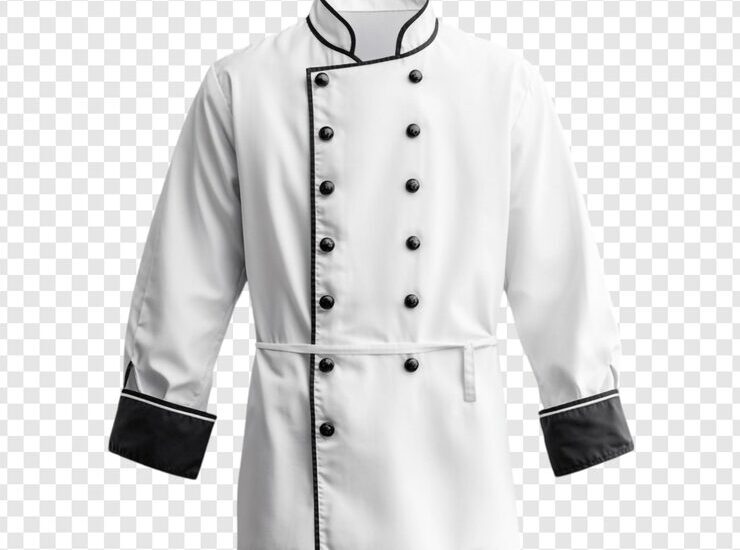
| Restaurant (standalone) | F&B-specific | Menu personality, stain performance | Cotton-poly or smart polyester | Chef uniforms same as floor staff |
| Cafe & casual dining | Smart-casual | Approachability, brand consistency | Cotton-poly 180–200 GSM | T-shirts without brand structure |
| Event venue | Occasion-led | Elegance, crease recovery, event-flex | Satin-poly / Premium viscose | Non-iron fabric showing wrinkles at events |
7 Warning Signs Your Hospitality Team Is Wearing the Wrong Uniforms
These are the signals that tell you — and your guests — that something is wrong with your uniform programme. If you recognise any of them, act now.
| Warning Sign | What It Tells Guests | What to Do |
|---|---|---|
| Colour mismatch across departments | The hotel lacks attention to detail | Brief a hospitality uniform supplier with a unified Pantone palette |
| Generic construction-site style fabric | Staff look like contractors, not hosts | Switch to poly-viscose or cotton-poly hospitality-grade fabric |
| Uniforms fading unevenly across team | Quality standards are inconsistent | Source colour-fast fabric rated to 50+ wash cycles |
| Ill-fitting uniforms on floor staff | The hotel does not invest in its people | Request full size range from XS to 5XL + alteration support |
| No logo or branding on uniforms | The hotel has no identity at the touchpoint | Commission branded hospitality uniforms with embroidered logo |
| Maintenance staff in unmarked workwear | The team looks like outside contractors | Add hotel logo + colour palette to all hotel maintenance uniforms |
| Staff adjusting uniforms during service | Comfort failure — likely wrong fabric/fit | Re-spec with a hospitality uniform manufacturer who does fit testing |
How to Switch from Generic Workwear to Proper Hospitality Uniforms
If your team is currently wearing generic workwear, here is how to fix it efficiently.
Step 1: Audit What You Have
Walk your property and assess every department. Note the fabric quality, colour consistency, logo presence, fit accuracy, and visible wear across your team. This becomes your baseline and helps prioritise which department to upgrade first.
Step 2: Define Your Brand Standards per Department
Before you approach any hospitality uniform manufacturer in Mumbai, define your brand standards. This means: your primary and secondary brand colours in Pantone codes, your logo in vector format, and a brief for each department’s silhouette and functional requirements.
A good hospitality uniform supplier will help you refine this brief. But the direction must come from you.
Step 3: Prioritise Front-of-House First
Start with the departments guests see most — front desk, restaurant floor, concierge, lobby staff. These have the highest brand impact and the highest guest scrutiny. Back-of-house and maintenance can follow in the second phase.
Step 4: Sample Before You Commit
Request fabric samples and pre-production samples from your hospitality uniform supplier. Wash each sample three times. Check for colour stability, shrinkage, and pilling. Wear-test across a shift if possible. Do not skip this step.
Step 5: Establish a Reorder System Before You Need It
The moment your first order lands, set your reorder schedule. Confirm your hospitality uniform supplier holds your full specification on file. For each department, note the replacement cycle and schedule the next order accordingly.
Conclusion
The question is not whether you can use generic workwear in a hospitality environment.
The question is what it costs you when you do.
Every guest interaction where your staff look inconsistent, unbranded, or visibly uncomfortable is a small friction. Small frictions compound. They become reviews. They become repeat visit decisions. They become the gap between a good property and a great one.
Purpose-designed hospitality uniforms close that gap. They tell every guest, at every touchpoint, that your operation is considered, professional, and worth returning to.
Work with hospitality uniform manufacturers in Mumbai who understand this distinction. Brief them precisely. Test their work. And invest in your team’s appearance the same way you invest in your decor, your menu, and your service standards.
Your uniform is a brand decision. Make it intentionally.
Frequently Asked Questions
Q1. What is the main difference between hospitality uniforms and regular workwear?
Generic workwear is designed primarily for function and safety in industrial or physical environments. Hospitality uniforms serve three simultaneous purposes: brand communication, guest experience enhancement, and functional support for specific hospitality roles. Hospitality uniforms are chosen for appearance, colour accuracy, and long-shift comfort — criteria that do not feature in generic workwear design.
Q2. Can I use regular workwear for my restaurant or hotel staff?
Technically yes — but it is a brand and operational mistake. Generic workwear communicates the wrong signal to guests in any guest-facing hospitality role. It lacks brand alignment, is not designed for the specific movement patterns of hospitality roles, and does not hold colour accurately through commercial washing. For any property where guest experience matters, purpose-designed hospitality uniforms are the correct choice.
Q3. Do hotel maintenance uniforms need to be different from other maintenance workwear?
Yes. Hotel maintenance uniforms must carry the hotel’s brand identity — logo, colour palette, and design language consistent with the rest of the property’s uniform programme. Generic maintenance workwear looks like contractor clothing and signals to guests that this team is not part of the hotel. Maintenance staff are visible throughout the property. Their appearance is part of your brand, whether you manage it or not.
Q4. What fabric should hospitality uniforms use?
For most front-of-house and back-of-house hotel roles, polyester-viscose blend at 190–220 GSM is the recommended standard. It balances breathability, appearance, wash durability, and colour fastness. For luxury hotel uniforms and premium guest-facing roles, wool-poly blend or premium modal are appropriate. For kitchen and chef roles, cotton or chef-grade poly-cotton is required for heat resistance and hygiene compliance.
Q5. How do I find the right hospitality uniform manufacturer in Mumbai?
Look for hospitality uniform manufacturers in Mumbai with a documented portfolio of hotel, restaurant, and hospitality clients at or above your property’s grade. Confirm they offer in-house embroidery, Pantone-matched colour dyeing, pre-production sample approval, and a reorder consistency guarantee. Avoid suppliers whose portfolio is primarily industrial or corporate workwear — the design and operational requirements are fundamentally different.
Q6. What is the cost difference between hospitality uniforms and generic workwear?
Generic workwear typically costs 30 to 50 percent less per piece than purpose-designed hospitality uniforms. However, hospitality uniforms last significantly longer per wear cycle, require less frequent replacement in terms of appearance standard, and deliver brand value that generic workwear cannot. Over a two-year period, the true cost difference is considerably smaller than the upfront price gap suggests — and the brand value difference is substantial.