

School Uniform Vendor Selection Checklist for Principals and PTAs (2026)
- November 8, 2026
- Posted by: admin
- Category: School uniform
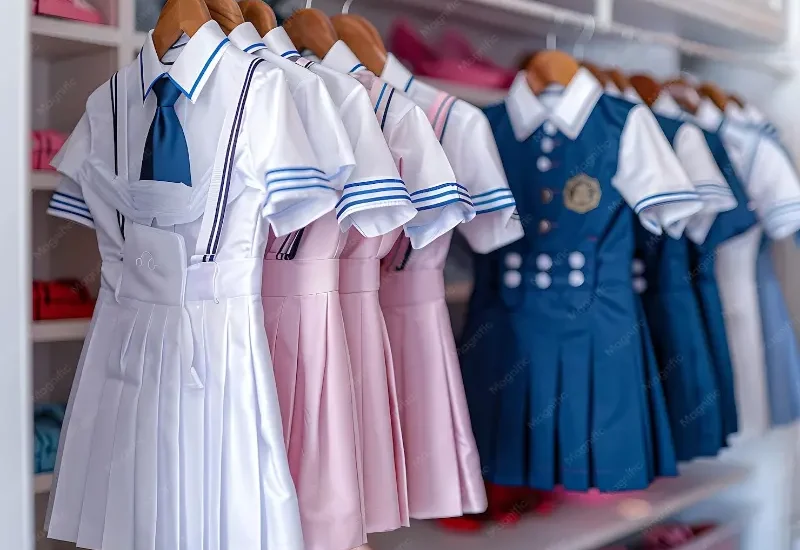
Choosing a school uniform vendor affects every family in the school. Parents notice when the fabric fades, when sizes run out in June, when prices are not clear, or when the shirts do not match last year’s. A fair, documented selection process protects students, parents and the school’s reputation.
This guide gives principals, management and parent-teacher associations a practical checklist: how to write the specification, what documents to ask vendors for, how to judge samples, how to plan sizes and delivery before the new term, and how to compare vendors on the same basis. It also covers how to handle complaints and annual reorders.
Key Takeaways
- Write a specification before you invite vendors, so that everyone quotes for the same thing.
- Ask every vendor for the same documents, and keep a record of the comparison.
- Judge a sample by wearing it and washing it, not only by looking at it.
- Plan sizes and delivery well before the term starts. Late uniforms affect every family.
- Make pricing transparent to parents, whether the school sells or families buy.
- Agree how complaints, exchanges and annual reorders will be handled, in writing.
Quick Answer
How should a school choose a uniform vendor?
Write a specification, invite a small number of vendors, and compare them on the same documents, samples, prices and delivery plans. Involve the principal, management and parent representatives, record the decision and its reasons, and agree exchange and reorder terms in writing before you sign.
Who Should Be Involved
| Role | Contribution |
| Principal | Sets standards and signs off the specification |
| Management or trust | Approves the vendor and the commercial terms |
| PTA or parent representatives | Review samples, fit and price from a parent’s view |
| Admin or accounts staff | Check documents, invoices and payment terms |
| Teachers (PE and class) | Comment on comfort and practicality |
Involving more than one person also protects the school by showing that the choice was made fairly. When you compare school uniform manufacturers, a shared decision that is written down is easier to defend to parents and the management.
Step 1: Write the Specification
Before you ask for quotes, decide:
- Garments: shirts, trousers, skirts, pinafores, blazers, ties, belts, sports kit, socks, sweaters.
- Sizes: age or grade range, and whether extended sizes are needed.
- Fabric: composition, weight and finish for each garment.
- Colours: exact shades, shown on a physical sample or a swatch.
- Branding: school logo, house colours, where and how applied.
- Quantities: an estimate by class and size.
- Delivery: dates, location and packing by size and class.
Without a specification, vendors will quote different fabrics and prices cannot be compared.
Step 2: Ask Vendors for the Same Documents
| Document | Why |
| GST registration and business registration | Basic vendor verification |
| Bank details and cancelled cheque | For payment setup |
| Quotation with breakdown | Lets you compare line by line |
| Fabric data sheet | Composition and weight |
| Test reports | Shrinkage and colourfastness |
| Sample garments | To assess fit and finish |
| References from other schools | To check reliability |
| Terms for exchange and reorders | To avoid disputes |
Ask for the same documents from all vendors and record what each provided.
Step 3: Judge the Samples
Do not judge by appearance alone.
- Fit. Have students of different ages and builds try the garments.
- Comfort. Check the neckline, waistband and seams after a day of normal activity.
- Fabric. Compare with the data sheet. For school wear, a polyester-cotton blend such as 65/35 is common because it holds shape and colour through frequent washing.
- Wash. Wash the sample several times at home or in a laundry and check shrinkage and colour.
- Logo. Check size, position and stitch quality.
- Shade. Compare to the school’s colour reference in daylight.
Ask vendors for a numeric shrinkage limit. Published workwear and uniform fabric data sheets commonly cap dimensional change at around ±3% after a stated wash procedure.
Step 4: Plan Sizes Properly
Sizes are the most common source of parent complaints. A good vendor will:
- provide a size chart by age or grade, with chest, waist and length;
- offer a measurement form or a fitting session;
- keep a record of the school’s size distribution for reorders;
- cut girls’ and boys’ patterns separately.
Order from the size curve of your own students, not from a standard distribution, and plan for growth between terms.
Step 5: Plan Delivery and the School Year
Uniforms should be in place before term begins. Work backwards from the first day:
- date by which parents need to be able to buy;
- date of delivery to school or the store;
- date of production completion;
- date of sample approval.
Add a margin for approvals and delays. Ask each vendor for a dated schedule that shows the approvals they need from you. Late sample sign-off is the most common cause of late delivery.
Step 6: Make Pricing Clear to Parents
- Ask for a price list by item and size.
- Decide whether the school sells uniforms or families buy directly from the vendor, and make the arrangement public.
- Confirm GST treatment with your accountant. Readymade garments valued up to ₹2,500 per piece attract 5% GST and those above attract 18%, from 22 September 2025.
- Agree when and how prices can change, and how much notice parents get.
Step 7: Agree Exchanges, Complaints and Reorders
| Topic | What to agree |
| Wrong size | Exchange window and process |
| Defects | Replacement timelines and who pays |
| Reorders | How and when new stock is made, and price holds |
| Changes | How a design or colour change is introduced |
| Records | The vendor keeps the pattern, shade reference and size chart |
Put these in writing. It prevents disagreement later.
Step 8: Compare Vendors Side by Side
Score each vendor from 1 to 5 on each criterion, and weight by what matters. The weights below are an example.
| Criterion | Example weight | Vendor A | Vendor B | Vendor C |
| Sample quality and fit | 25% | |||
| Fabric evidence and test reports | 15% | |||
| Price transparency | 15% | |||
| Delivery reliability and schedule | 15% | |||
| Size range and fitting support | 10% | |||
| Exchange and reorder terms | 10% | |||
| References from schools | 10% |
Fairness and Record Keeping
- Use the same specification and the same deadline for every vendor.
- Keep all quotations, samples and notes.
- Record who attended each meeting and the reasons for the decision.
- Declare any personal interest a committee member may have in a vendor.
A clear record protects the school if a parent asks why a particular uniform manufacturer in Mumbai was chosen over the others.
Questions to Ask a School Uniform Vendor
- Do you manufacture the garments yourselves?
- Which fabric do you propose for each item, and can I see test reports?
- How do you keep colours and sizes consistent every year?
- What is your schedule from approval to delivery?
- Can you support a fitting or measurement drive?
- What is your exchange policy?
- Can you share references from other schools?
- What documents do you provide for vendor registration?
Frequently Asked Questions
How many vendors should a school consider?
Three or four is enough. Ask each for the same documents, samples and quotation, and compare them using a scorecard.
What documents should a school ask a uniform vendor for?
GST registration, business registration, bank details, a quotation with breakdown, a fabric data sheet, test reports, samples, references and terms for exchange and reorders.
When should a school start choosing a vendor?
Several months before the term begins, so that there is time for samples, approval, production and delivery. Late approval is the most common cause of late uniforms.
How do we keep uniforms consistent from year to year?
Ask the vendor to keep the pattern, the shade reference and the size chart on file, and to check each new batch against the approved sample.
Should the school sell uniforms or let parents buy directly?
Both models are used. Whichever you choose, make the prices public and the process clear to parents. Check the tax treatment with your accountant.
What should we do if parents complain about quality?
Check the garment against the approved sample and the test report, apply the agreed exchange policy, and keep a record of the complaint and the outcome.